
2015-01-20
.jpg)
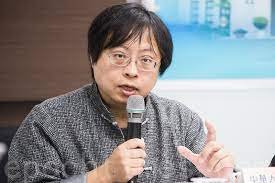
Former Hong Kong chief executive Tung Chee-hwa speaks at a news conference about the government’s responsibility to pass national security legislation in Hong Kong, Jan. 20, 2015.
RFA
Hong Kong lawmakers on Tuesday hit out at renewed proposals for controversial anti-subversion legislation in the semi-autonomous Chinese city after it was shelved following mass popular protests in 2003, as a former leader of the city said the law must be passed eventually.
Popular anger over proposed Article 23 legislation on national security and subversion-related crimes culminated in mass demonstrations on the sixth anniversary of Hong Kong’s handover to China on July 1, 2003.
Hundreds of thousands of protesters who marched feared the bill would erode civil liberties and media freedoms after promises from Beijing that these would remain unchanged following the 1997 handover ending more than a century of British rule in the territory.
But former chief executive Tung Chee-hwa, who resigned early in 2005 following the government’s embarrassing defeat over Article 23, said on Tuesday it was “a matter of time” before national security legislation was enacted in Hong Kong.
Tung, who as vice-chairman of the parliamentary advisory body, the Chinese People’s Political Consultative Conference (CPPCC), is unlikely to be speaking without the backing of the ruling Chinese Communist Party, said “national sovereignty and security” cannot be compromised.
“The Hong Kong government has the responsibility to pass national security legislation locally, so this is a matter of time,” Tung told a news conference on Tuesday.
“Our country is starting to become stronger, and its importance is growing on the world stage,” Tung said. “From Hong Kong’s point of view, we can’t act as if we were outsiders.”
“We should know that this is important, and that one day we will have to enact this legislation.”
Drop the stance
He called on Hong Kong lawmakers to drop their “anti-communist” stance and focus on the well-being of its citizens by supporting Beijing’s electoral reform plan, which sparked the Occupy Central, or Umbrella movement, last September.