
FEB. 26, 2015
BEIJING — First, the police took away the think tank’s former graphic designer, then the young man who organized seminars, and eventually its founder. Another employee fled China’s capital, fearing he would be forced to testify against his colleagues in rigged trials.
“The anxiety is overwhelming, not knowing if they are coming for you,” said the employee, Yang Zili, a researcher at the Transition Institute of Social and Economic Research in Beijing, who has been in hiding since November. “It’s frightening because as they disappear, one friend after another, the police are not following any law. They just do as they please.”
These are perilous days for independent civic groups in China, especially those that take on politically contentious causes like workers’ rights, legal advocacy and discrimination against people with AIDS. Such groups have long struggled to survive inside China’s ill-defined, shifting margins of official tolerance, but they have served as havens for socially committed citizens.

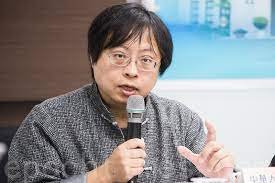
Yang Zili, a Transition Institute researcher, in January. Mr. Yang has been in hiding since November. Credit Andrew Jacobs/The New York Times
Under President Xi Jinping, however, the Communist Party has forcefully narrowed the bounds of accepted activity, setting off fears that these pockets of greater openness in China’s generally restrictive political landscape may soon disappear.
In recent months the government has moved against several groups, including one that fights discrimination against people with hepatitis B and even a volunteer network of 22 rural libraries.
“The pressure on grass-roots organizations has never been this intense,” said Zhang Zhiru, who runs a labor rights group in the southern manufacturing city of Shenzhen in Guangdong Province. In the past year, his car has been vandalized, and police harassment has forced his organization to move more than 10 times. In December, the last of his five employees quit.
Regulations that took effect last month in Guangzhou, a city in southern China, have intensified scrutiny of nonprofit organizations that receive foreign donations, and the central government has proposed legislation to tighten controls on foreign nongovernment organizations active in China, according to the state-run Xinhua news agency. With Chinese philanthropists wary of upsetting the authorities, funding to Mr. Zhang’s organization, the Shenzhen Chunfeng Labor Dispute Service Center, has dried up, and even Chinese crowdfunding websites refuse to list it.
“The government just wants us to disappear,” Mr. Zhang said.
The campaign has focused on groups deemed sanctuaries for dissent. From its cramped offices in the university district of northwest Beijing, the Transition Institute championed a mix of free market economics and support for the downtrodden, conducting research on the exploitation of taxi drivers, school policies that shortchange rural children and the environmental costs of the massive Three Gorges Dam on the Yangtze River. But the institute also attracted advocates of democratic reform, some of whom had prior run-ins with the authorities.
“We always hoped to eke out survival in tough circumstances,” said Mr. Yang, 43, the researcher now in hiding, who spent eight years in prison for holding informal discussions with a group of friends about multiparty elections and a free press. “But the more independent NGOs,” he added, referring to nongovernmental organizations, “especially the ones that criticize government policies or don’t help the government’s image, have encountered a policy of containment, even destruction.”
Before its employees began vanishing, the Transition Institute was part of an undergrowth of privately funded organizations that spread despite the government’s ambivalence toward independent, civil society groups. Guo Yushan, an activist and economist from rural eastern China, established the institute in 2007 after parting ways with a legal rights advocate, Xu Zhiyong, who embraced a bolder approach to campaigning for citizens’ rights.