
2015-09-22
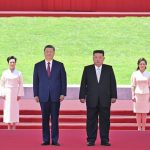
Chinese President Xi Jinping headed to the United States on Tuesday at the start of a state visit, amid calls for the release of political prisoners and concerns over cybersecurity.
Xi will hold talks with President Barack Obama later this week, before making an appearance at the United Nations’ 70th anniversary summit in New York at the end of the month, official Chinese media reported.
His trip comes amid growing calls on Beijing to improve its human rights record and to release prisoners of conscience, including an open letter to Xi from 40 overseas-based writers and authors on the eve of his trip.
“We urge you to release the Chinese writers and journalists who are languishing in jail for the crime of expressing their opinions,” the letter, signed by writers including Neil Gaiman and Xiaolu Guo and China expert Andrew Nathan, said.
It cited the cases of jailed Nobel peace laureate Liu Xiaobo and his wife Liu Xia, who has been held incommunicado at the couple’s home without being accused of any crime, Uyghur scholar Ilham Tohti, who spoke out about the plight of the mostly Muslim Uyghur group, and veteran journalist Gao Yu, 71, whose requests for medical parole based on ill-health have been repeatedly denied.
“We have documented cases of at least 47 writers and journalists currently imprisoned in China,” the letter said, adding that the average sentence for a writer is eight years in prison.
It added: “The imprisonment of writers and journalists damages China’s image abroad and undercuts its ambition to be a strong and respected partner on the world stage.”
Meanwhile, the overseas-based Chinese Human Rights Defenders (CHRD) network, which collates reports from rights groups inside China, launched an online petition calling for the release of prominent women activists, including Gao, detained rights lawyer Wang Yu and women’s rights activist Su Changlan.
The petition calls on U.N. Secretary-General Ban Ki-Moon and U.N. Women to press the Chinese government to free all detained women rights defenders, and to drop all criminal charges against the five feminists detained ahead of International Women’s Day, before Xi speaks at the U.N. Summit.
China as key player
But the ruling Chinese Communist Party’s tightly controlled state media on Tuesday brushed aside criticisms of the government’s record on human rights, saying the rest of the world should treat Beijing as an equal.
“China’s political stability cannot be challenged,” the Global Times newspaper, sister paper of party mouthpiece the People’s Daily, said in an editorial on Tuesday.
“The contest between Beijing and Washington in political values and institutions reached a climax following the 1989 Tiananmen incident,” it said, claiming that the U.S. had shifted the focus of its China policy to “economic benefits” in the mid-1990s.
The paper said the U.S., “prepossessed with the notion of its superiority in political system and values, and the mission to expand them, is challenging Beijing’s political stability, directly and indirectly,” and had evoked “strategic distrust” from China.