
2014-09-03

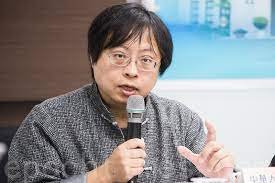
Former Hong Kong Chief Executive Tung Chee-hwa smiles as he addresses a news conference in Hong Kong, Sept. 3, 2014.
EYEPRESS NEWS
Hong Kong’s beleaguered pro-democracy movement has vowed to push ahead with protests this week, while conceding defeat after the National People’s Congress (NPC), China’s top legislative body, ruled out universal suffrage in 2017 elections.
Students in the city said they will boycott classes for a week beginning Sept. 22, despite claims by official Chinese media that the Occupy Central movement is quickly losing support.
“Yes, that’s right,” a student who answered the phone at the Hong Kong Federation of Student Unions said on Wednesday when asked to confirm reports of the boycott. “But you shouldn’t report it for the time being; we’ll be in touch [when our leader Alex Chow is here].”
China’s English-language Global Times newspaper said in an opinion article on Wednesday that Hong Kong opinion is now swinging against the Occupy movement, which has threatened mass protests in the city’s financial center if Beijing refuses to allow a genuine choice of candidates in the city’s 2017 leadership election.
“Many influential media outlets in Hong Kong in their Monday editorials sought to persuade the pan-democratic camp either to accept the NPC’s decision or keep communicating with the central government,” the Global Times said.
“They stated explicitly that they don’t want Hong Kong to be dragged into chaos,” it said.
The article said “Western-style democracy” isn’t a suitable option for the former British colony, which was promised a “high degree of autonomy” under the terms of its 1997 handover to Chinese rule.
“It’s risky for small societies like Hong Kong and Taiwan to operate Western-style politics,” the article said. “We hope Hong Kong can maintain its status as an economic hub.”
It said the pro-democracy movement was “the weakness of Hong Kong society.”
Former ‘diehard’
Meanwhile, Jeff Tsui, formerly one of the 10 “diehards” at the heart of Occupy Central, announced his withdrawal via the pro-Beijing Sing Pao newspaper.
Hedge-fund manager and fellow diehard Edward C.K. Chin told RFA he believes that Tsui had come under intense political pressure from Beijing.
Chin, whose own pro-democracy column in the Hong Kong Economic Journal newspaper was axed on Tuesday, said Tsui had declined to give a reason when contacted by phone on Wednesday.
“This came out in the Sing Pao, but when it was written, and who wrote it, [it’s hard to say],” Chin said.
He said the style of writing was nothing like Tsui’s usual style.
“He used the word ‘illegal,’ and he didn’t use ‘citizen resistance,'” Chin said.
“I tried to speak to him, via [messaging service] WhatsApp, but he said it wasn’t convenient to talk,” he said.
“I think he is very likely having his [mainland business] accounts frozen across his business network,” Chin added.