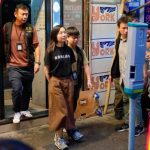


A pro-democracy rally earlier this year in Hong Kong.
LARIQUE/FLICKR/CREATIVE COMMONS
15 September 2014 12:45 pm
Hong Kong’s academics are being drawn into a long-running debate over local election procedures as student activists organize a boycott of classes to protest what they argue are undemocratic restrictions proposed by Beijing. More than 500 professors and staff members at 20 of the city’s colleges and universities have signed a statement supporting the students. And at least a few worry that Beijing’s attempts to micromanage local affairs could eventually crimp academic freedom.
A statement of support titled “Don’t let the striking students stand alone” is posted in Chinese and English on the Hong Kong Professional Teachers’ Union’s website.
“As teachers and as citizens, we are pained and outraged to see the advancement of democracy in Hong Kong stifled and suppressed,” the statement begins before strongly endorsing student activism: “When we look back at history, both in China and overseas, we see that student movements have been an important force in pushing for social progress. Our hope in Hong Kong’s future lies in the passion and spirit shown by our young people and their willingness to take up the mantle in the fight for democracy and social justice.”
Universal suffrage in elections for Hong Kong’s chief executive by 2017 was a key principle underlying agreements to transfer Hong Kong from British to Chinese sovereignty in 1997. But the details were never spelled out. On 31 August, a committee of China’s National People’s Congress announced that only two or three people should be eligible to run for Hong Kong’s top political post and that all candidates should be selected by a nominating committee widely seen as favoring Beijing.
Hong Kong’s pro-democracy advocates believe these conditions ensure that only pro-Beijing candidates will appear on the ballot. The announcement touched off demonstrations partly aimed at persuading Hong Kong’s Legislative Council, where a two-thirds vote is needed for approval, to reject the proposal. An “Occupy Central” movement plans to disrupt activity in the city’s business district early next month. And student activists are organizing a class boycott that could start the week of 22 September.
The faculty support statement calls on teachers to be lenient in dealing with student absences, avoid scheduling important tests during the boycott, help student strikers keep up with class work, and wear yellow ribbons to show solidarity.
“We have support from 20 local tertiary institutions with 520 signatories as of 13 September across most academic disciplines,” says Chor-yung Cheung, a political scientist at the City University of Hong Kong.
If there is a student strike, “it will be business as usual,” at the University of Hong Kong, says Sun Kwok, an astronomer and the school’s dean of science. “Classes will continue to be held for students.”
In response to a query from ScienceInsider, the Hong Kong University of Science and Technology (HKUST) issued a statement saying the school “values freedom of speech, academic freedom and also rule of law.” But teaching and operations will go on normally, the statement reads.