

May Tse/South China Morning Post
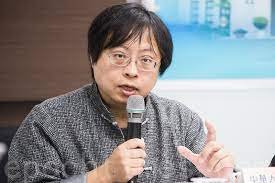
Human Rights lawyer Teng Biao
Teng Biao is one of China’s best-known civil-rights lawyers, and a prominent member of the weiquan, or “rights defenders,” movement, a loosely knit coalition of Chinese lawyers and activists who tackle cases related to the environment, religious freedom, and freedom of speech and the press. He came to national attention in 2003 when he and two other young Peking University law students successfully petitioned parliament to end the “custody and repatriation” law that gave police sweeping power to detain people for failing to have a residence permit or valid ID. The issue had come to national attention after a twenty-seven-year-old university graduate was beaten for failing to have proper identity papers.
Teng, who is 41, is also a founder of gongmeng, the Open Constitution Initiative, a group of lawyers and academics who argue for greater rule of law and constitutional protections, and the New Citizens Movement, a broader group of civil rights activists. He is a lecturer at the University of Politics and Law in Beijing but has been banned from teaching since 2009 because of his political activities He is currently a fellow at Harvard Law School. I met him in Berlin in late August, a few days before he left for the United States.
Ian Johnson: This week, the Chinese Communist Party is staging its annual plenum—that much-watched event in which hundreds of members of the party’s central committee gather to discuss policy. This year’s theme is supposed to be “governing the country according to law.” Do you expect any significant changes to come of it?
Teng Biao: I don’t care what they talk about; I don’t expect anything. For the past two years they’ve arrested more than three-hundred human rights defenders and intellectuals, such as Pu Zhiqiang, Tang Jingling, and Ilham Tohti. And they have destroyed many Christian churches, they cracked down on the Internet, and they published a series of articles against universal values [an expression for human rights, civil liberties and other values that are enshrined in international law but often criticized in China as Western], constitutionalism, and judicial independence. With such actions, they can’t have meaningful reform of the legal system.
You’ve said that Xi Jinping is trying to bring China back to a totalitarian kind of system with a cult of personality. But in a totalitarian system, the government controls much more of daily life than is the case in China today.
He is not able to achieve totalitarianism, but he wants to. The problem for him is the civil society in China is stronger than he thinks. We have the Internet, we have globalization, we have a market economy.
It seems like a darker time today. In the 2000s, you had all these movements like the New Citizens’ Movement. But one by one they’ve been closed down, its leaders arrested, or silenced. Was there more hope a decade ago when you were finishing your Ph.D.?
In general I’d say that Chinese leaders have never stopped their crackdowns and control of civil society. They’ve arrested dissidents and leaders when they feel it’s necessary. So they arrested student leaders after 1989. They arrested the leaders of the China Democracy Party in the late 1990s, like Xu Wenli. They arrested Liu Xiaobo three times and many other democracy activists.
Late last year, the government said it had abolished laojiao [Re-education Through Labor, a practice according to which police had wide-ranging powers to detain people and send them to labor camps without trial]. Have they definitively repudiated this kind of detention or is it just cosmetic?
It can be considered progress, but in China there are many other methods of extrajudicial detention, such as shourong jiaoyu [detention for education] and shourong jiaoyang [work-study detention for juveniles], as well as black jails to detain petitioners, and shuanggui [extrajudicial detention for officials under investigation of wrongdoing].
So why did they abolish Re-Education Through Labor if they have so many other methods to detain people without trial?
Because this one is the most infamous. They faced pressure from civil society, such as in the Tang Hui case [in which a woman was sent to a labor camp in 2012 for trying to find the men who had raped her daughter] and also from the international community. Many people abroad know of laojiao but they don’t know the other methods.
Still, I think it is progress. It was so easy for police to put people in Re-education Through Labor. Since it was abolished they more often use the provisions for criminal detention under the criminal procedures law. According to that, the police can detain a person for thirty days without any involvement of the prosecutor or the court. But after thirty days they are supposed to apply for a formal arrest. If the arrest is authorized then the case enters the criminal procedure. If not, then they are released. So it’s more complicated to use these other methods.