
2014-11-11

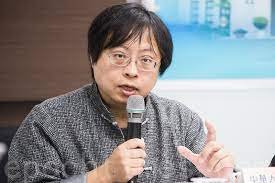
Hong Kong civil servant Benny Mok, a 51-year-old diabetic man, ended his 40-day hunger strike at Admiralty in support of the student-led pro-democracy demonstrations, Nov. 11, 2014.
RFA
The Hong Kong government on Tuesday ruled out further dialogue with student leaders of a mass pro-democracy protest that has blocked major roads in the former British colony for six weeks, as a court gave the green light to police to arrest anyone blocking roads it has ordered cleared.
Carrie Lam, second-in-command to embattled chief executive C.Y. Leung, called on protesters who remain encamped on the highway near government headquarters in Admiralty, as well as those occupying busy intersections in the shopping districts of Causeway Bay and Mong Kok, to leave peacefully.
She hit out at the influential Hong Kong Federation of Students (HKFS) for “hardening” its stance following the live televised debate during which Lam and fellow officials offered to file a fresh report to Beijing taking the Occupy Central movement’s call for universal suffrage into account.
“The [Hong Kong] government went into the two-hour dialogue on Oct. 21 with sincerity, and promised to work to move things forward,” Lam told a news conference. “The student federation didn’t show the same level of sincerity; in fact their position hardened after the debate.”
She said the students’ insistence that China’s parliament, the National People’s Congress (NPC) withdraw an Aug. 31 decision ruling out the public nomination of candidates in 2017 elections for the chief executive “is not in keeping with” Hong Kong’s mini-constitution, the Basic Law.
“So I don’t think that there is any room for dialogue with us for the time being,” Lam said.
Cold water
Lam also poured cold water on plans by the HKFS to send a delegation to meet with officials in Beijing.
“Even if the students insist on traveling to Beijing, officials there will only reiterate the same position they have held all along, so it seems unnecessary,” she said.
But she invited the students to submit any “fresh” proposals to a second round of public consultation on the government’s electoral reform proposals.
“We will keep the door open for communication regarding the student federation’s participation in the working group on [post-2017] political reforms,” she added.
The Aug. 31 NPC standing committee ruling said that while all five million Hong Kong voters will cast a ballot in the election for Leung’s successor, they will only be allowed to choose between two or three candidates approved by a pro-Beijing committee.
The 1,200-strong election committee, which voted Leung to power in 2010 with just 689 votes, has just 7.5 percent representation of pan-democratic politicians, far less that the broad popular support those groups enjoy.
Current pan-democratic lawmakers in the territory’s Legislative Council (LegCo) were voted in with some 56 percent of the popular vote, compared with just 44 percent won by pro-Beijing politicians.
Won’t leave
Many of the protesters who remain in tents at the three Occupy Central sites say they won’t leave unless Beijing withdraws the ruling, which protesters and pan-democratic politicians have dismissed as “fake universal suffrage.”
Other activists are calling for Leung to resign over the use of tear gas and pepper spray on umbrella-wielding protesters on Sept. 28, after which the Occupy protests swelled to hundreds of thousands at their height.
Leung also raised hackles last month when he said the voting system must be weighted to prevent people on a low income from dominating Hong Kong politics.