
Nov. 28, 2014 8:31 AM EST
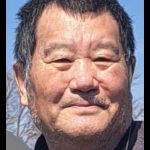
BEIJING (AP) — A leading rights activist who organized rallies for media freedom pleaded not guilty to charges of disturbing public order in a Chinese court where he went on trial Friday more than 15 months after being detained.
The case against Yang Maodong, 48, comes amid a broadening crackdown on dissent by Beijing, which is increasingly intolerant of any form of activism. In January, a Beijing court sentenced legal activist Xu Zhiyong to four years in prison for leading a loosely organized civil movement. Several of his followers also were imprisoned.
New York-based Human Rights Watch called on authorities to drop the charges against Yang, better known by his penname Guo Feixiong, and fellow defendant Sun Desheng, who was implicated for his activism of urging the Chinese government to grant more rights to its people and to disclose officials’ assets.
“Beijing’s assault on civil society seems to know no bounds as peaceful activists are increasingly subject to criminal prosecutions,” said Sophie Richardson, the group’s China director, in a statement.
“At what point will the Chinese government realize individuals like Guo Feixiong and Sun Desheng are allies in strengthening the rule of law, not enemies of the state?”
Yang has advocated for greater political freedom and more civic engagement in China. In January 2013, Yang helped organize demonstrations and spoke in support of the editorial staff at the newspaper Southern Weekly in Guangzhou after its journalists said a New Year’s message that called for rule by the constitution was altered because of censorship.
The charge alleges he gathered crowds to disrupt public order, but his supporters say the rallies were orderly.
He also encouraged activists to hold up placards in several cities. To avoid confrontation with police, the activists typically did not linger but left quickly after taking photographs of their acts, then posting the images online. Authorities have found such acts unacceptable, and Chinese courts have actively prosecuted the quick protests.
Sun was not involved with the Southern Weekly rallies, but his charge — the same as Yang’s — stems from his unfurling banners calling for public disclosure of officials’ assets and urging China’s legislature to ratify the International Covenant on Civil and Political Rights, Sun’s lawyer Chen Jinxue said.
Zhang Lei, lawyer for Yang, said on his microblog that the trials against Yang and Sun at Tianhe District Court got off to a tense start when the court several times cut off arguments by the defense.
Around 7 p.m., Zhang posted a note saying the full-day trial would resume after a 30-minute recess. He said he expected the procedures to continue through 4 a.m. Saturday.
Chen said the judge only granted the evening recess after Yang nearly fainted from hunger in the court. Chen said the court had repeatedly rejected earlier requests for food.
The lawyers also said both Yang and Sun had been mistreated while in detention. Yang was denied any outdoor break for 469 days, and Sun had his ankles and wrists shackled for a week before the trial, Zhang said.
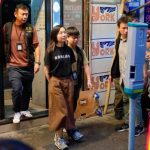
A court employee declined to confirm the trials, but he said a “special case” was taking place, without further elaboration. Rights lawyers and advocates said security was heavy around the courthouse and stretched as far as 3 kilometers (1.9 miles) out.