
Posted on 2015-01-23
In September last year, as China saw a series of media scandals, we ran several articles addressing the phenomenon of media corruption. We refer readers back to “Who Warped China’s Media?“; “China’s Corrupt Media“; and “Why News Extortion is So Hard to Uncover.”
Today we offer an excellent follow-up on the issue from one of China’s most knowledgeable media scholars, Foreign Languages University professor and former CMP fellow Zhan Jiang (展江).
Back on October 22, 2014, Zhan Jiang took part in an online discussion at 21ccom.net about media corruption, its causes and possible solutions. The website published the full text of Zhan’s interview yesterday.

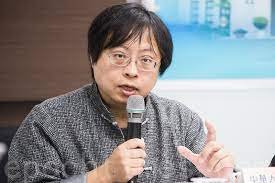
zhan[ABOVE: Professor Zhan Jiang discusses media corruption in China with 21ccom.net in October 2014.]
As much discussion of media corruption inside China centers on rotten journalists, as though the only relevant dimension is moral, Zhan Jiang’s interview is refreshingly frank. He explains why media corruption is endemic and, you might say, institutionalized.
We’ve translated only about half of the interview, but we strongly encourage readers of Chinese to study the rest.
Host: Hello everyone, I’m 21ccom.net editor Jiang Baoxin (蒋保信). I’m also the hosts of today’s conversation. Hello, Professor Zhan. This is the second time you’ve been a guest in the studio at 21ccom.net, isn’t it?
Zhan Jiang: That’s right. It’s been two or three years since the last time.
Host: After we pre-announced this online discussion, we promoted it on our WeChat public account as well, and web users submitted many valuable questions. Today we’d like to seek your expertise on these questions, which I’ve gathered today along with my own questions. Why don’t you first say hello to our web users.
Zhan Jiang: OK. Hello, everyone. 21ccom.net is a very influential sit for gathering social consensus and sharing ideas, and I’m really honored to be your guest.
Host:Looking back on the last couple of years, I think we can say it has been quite an eventful period for the media. If I can use one phrase to sum up my own feelings, I think it would be “a land of wailing and despair.” This has to do, I think, with the Chinese media’s own problems, and also with the larger backdrop of [China] in transition. I think this is a good time, Professor Zhan, to have you speak on the theme of “The Troubles Facing Chinese Media, and the Way Out” (中国媒体的困境和出路).
China Leads the World in Media Corruption
Host: In 2014, the anti-corruption drive advanced into the media. First, we saw an investigation into CCTV2, with Guo Zhenxi (郭振玺), Rui Chenggang (芮成钢) and others being arrested. After that, we had the investigation into the 21st Century Business Herald, where erstwhile angels of professional journalism became prisoners. This was a great shock to media colleagues. One of the major social roles of media is supervision, but we see that China’s media itself has become a corruption disaster zone (腐败的重灾区). What happened?
Zhan Jiang: First of all, media corruption is an outgrowth of political corruption and commercial corruption. A general level of corruption persists in our political and commercial cultures, and so the media cannot be the exception.
Specifically, corruption in China’s media also has to do with the pressures and challenges brought on by new media. And it has to do with the problems facing journalists themselves. For example, is it corruption for journalists to accept red envelopes? Even though everyone accepts red envelopes, this too is a form of corruption. And so, if we talk about the intrinsic and extrinsic reasons for corruption, there are many.
However, regardless, the level of corruption in China’s media is staggering. How staggering exactly? Search across the world and I’m sure you won’t find another country facing media corruption as serious as what you find in China. To be a bit less polite about it, China’s leads the world in media corruption.