
WED,10 SEPTEMBER 2014

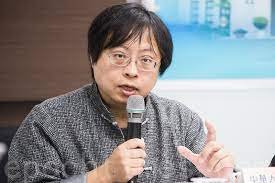
Joe Chung and the cultural roots of China’s political dictatorship
How much did Joe Chung anger the Hong Kong and Beijing establishment, and what were the results?
Chung was one of the most controversial authors on the popular but now-defunct House News, a Hong Kong-based news website and content aggregator founded by former radio personality Tony Tsoi and others to cover covers politics, business, lifestyle, media, and local news.
Tsoi abruptly killed the site on July 26 despite a readership of 300,000 unique visitors a day. He has been incommunicado since. However, in a notation on the website, he said he and his family were under pressure and that he was particularly fearful of what he called the White Terror.
Some observers credit Chung’s aggressiveness as one of the factors in the closure. Among other articles, his allegations of academic plagiarism of Xi Jinping’s PhD were believed to have caused House News to be shut down for several days due to hacking allegedly carried out by Chinese hackers.
The author, who writes only in Chinese, has for decades argued that despite enormous increases in per capita income, China is no closer to democracy than it was a decade ago. The answer, he says, may lie in the roots of China’s complex political culture, particularly the dogma that China must remain unified at all costs.
Chung’s books have been banned on the mainland because he finds fault both with the one-party state and with the traditional culture that sustains it. His claim that Taiwan has the right to independence, published in the Hong Kong Chinese-language newspaper Ming Pao in 1994, led to death threats from nationalists in Hong Kong.
Born in the 1960s, the author currently lives in Norway, well out of the clutches of Chinese authorities. He became concerned with Chinese politics following the imprisonment of Wei Jingsheng in 1979, whose essay “Fifth Modernization” was posted on the “Democracy Wall in Beijing in 1978. Chung unsuccessfully represented the Hong Kong Democratic Party in 1994 and 1999 district board elections. In 2001 he was criticized by the Chinese Communist Party as “more arrogant than Taiwan separatists” for openly calling for independence of Taiwan. That article, which triggered almost 100 attack articles from the three pro-Beijing newspapers in Hong Kong, was later cited by a Party-run publication in China justifying the urgent need for Hong Kong to enact legislation to implement the failed Article 23 of the Basic Law, a security measure designed to curtail basic freedoms.
Chung’s works have been compared to The Ugly Chinaman, a best-seller in China in the 1980s by author Bo Yang, when censorship was less strict. In the 1980s, China went through a period of openness to foreign literature as well as self-examination after the catastrophic Cultural Revolution. The Ugly Chinaman was a play on the title of the widely-read 1958 novel The Ugly American by Eugene Burdick and William Lederer that exposed American arrogance, incompetence and corruption in Southeast Asia. The Ugly Chinaman was not banned and was widely read. It attracted the attention of Sinologists such as Oxford University’s Rana Mitter and was translated into English.
In the aftermath of the failed democracy movement of 1989, the kind of attention that Bo Yang attracted was shortstopped by the CPC leadership, which decided that China had had enough exposure to books of this nature.
Chung is persona non grata on the mainland. Although his book I Don’t Want to be Chinese Again has topped the Chinese-language non-fiction best seller lists in Hong Kong and China for several years, few mainland Chinese have heard of him. Chung’s books have never been translated into English.