

2014-10-29
.jpeg)
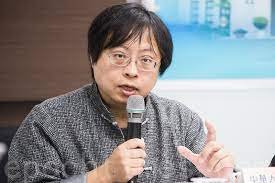
Hong Kong lawmaker James Tien speaks at a press conference in Hong Kong, Oct. 29, 2014.
AFP
A top parliamentary advisory body in Beijing on Wednesday expelled a prominent Hong Kong politician from its ranks after he called on the chief executive of the semiautonomous Chinese territory to resign.
James Tien, who was voted out by delegates to the Chinese People’s Political Consultative Conference (CPPCC), later also stepped down as chairman of the biggest pro-Beijing Liberal Party in Hong Kong.
The outspoken Tien, who last week added his voice to growing calls for the resignation of embattled chief executive C.Y. Leung, said stepping down as Liberal Party leader would enable him to “better serve” the people of Hong Kong.
“The CPPCC found the fact that our party has different opinions was not acceptable,” said Tien, who will keep his seat on Hong Kong’s Legislative Council (LegCo).
“If I want to represent the Hong Kong people, to give them a voice … my resignation will allow me to better serve Hong Kong people as a lawmaker over the next two years,” he said.
Tien had said on Friday that Leung should consider resigning, flying in the face of the ruling Chinese Communist Party’s official position that Leung should be supported in the face of “illegal” protests incited by “foreign forces.”
Tien is no stranger to public controversy and resigned from Hong Kong’s cabinet, the Executive Council, in 2003 over a proposed security law that was withdrawn in the face of mass protests and prompted the resignation of then chief executive Tung Chee-hwa.
No room for dissent
Veteran journalist and political commentator Ching Cheong said Beijing clearly couldn’t afford to tolerate dissent within the ranks of the China-backed Hong Kong political establishment.
“If they hadn’t taken action, people would have taken that to mean that Beijing’s support for C.Y. Leung was wavering,” Ching said. “[The message seems to be that] it’s OK to criticize him, but you can’t call for his resignation.”
“If Beijing doesn’t want him to resign, and you call for him to resign, then you’re setting yourself up in opposition to Beijing,” he said.
Ching said Tien’s ouster from the CPPCC was also calculated to send a warning to other pro-China politicians in Hong Kong.
“The establishment can’t afford dissenting voices, at least not for the time being,” he said.
“We know that support for C.Y. Leung is weak; he only got 689 votes, which means that nearly half [the pro-Beijing election committee that appointed him in 2012] didn’t want him to be chief executive.”
“They are killing the chicken to frighten the monkeys, so that the establishment won’t dare to go shooting its mouth off again,” Ching said.