
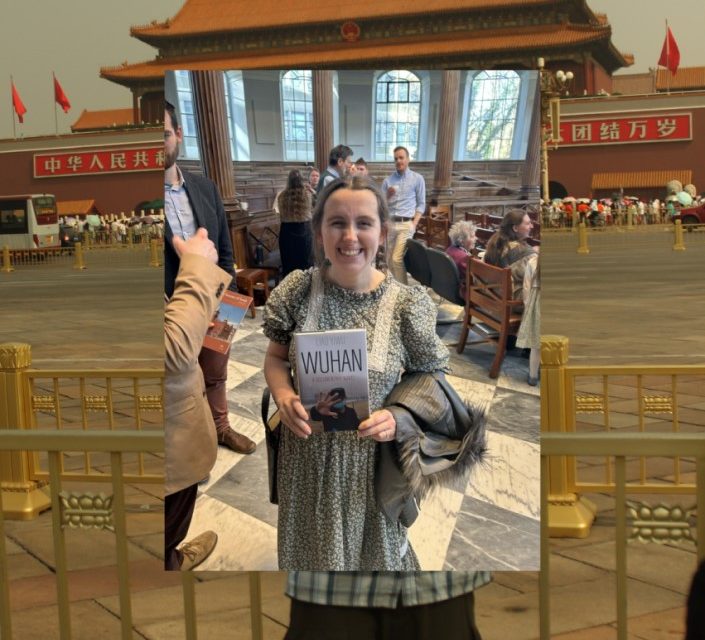
American high school student Eleanor Piersma interviews exiled writer Liao Yiwu
Two weeks ago, Peter Bernstein, the global agent in New York, forwarded me a letter that read:
My name is Eleanor Piersma, and I am an 11th-grade student at DeLaSalle High School in Minneapolis, Minnesota. I am currently working on a National History Day research project in the form of a short documentary on the topic of the Tiananmen Square protests and massacre.
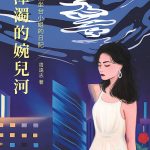
I recently read Liao Yiwu’s book *Bullets and Opium*, which provided me with deep insight into the lives of Chinese political dissidents during and after prison.
I was wondering if Liao would be willing to participate in an interview about his book and his personal experiences…
A high school girl reading “Bullets and Opium”? Unbelievable! And she comes from Minneapolis, a city that has garnered worldwide attention, where ICE agents publicly shot and killed two American citizens.
I decided to grant her a written interview. I wrote: ICE is like the Communist Party’s martial law troops 37 years ago, abusing state violence to suppress peaceful protesters. Trump is the American version of Deng Xiaoping, the dictator, and must resign.
—————————————–
- How did you first get involved in political dissidence?
Initially, I wasn’t interested in politics. When the massive demonstrations in Beijing in 1989, involving millions of people and pushing for a transition from authoritarian to democratic politics, took place, I, a nationally renowned poet, refused the invitations and offers of many fellow poets and writers, citing my refusal to participate in any political movements. From the turbulent city of Beijing, I took a two-day, two-night train journey back to Fuling, a mountain town on the banks of the Yangtze River in Sichuan. Then, on June 1st, an American sinologist named Michael Martin-Day came from Beijing to Fuling to find me. He had a very good radio that could pick up live reports from Tiananmen Square. At the time, journalists from many Western democracies were reporting live… Michael stayed at my house for half a month—in the early morning of June 4, 1989, we heard intense gunfire and screams on the radio, along with the roar of tanks and military vehicles, and the angry shouts, cries for help, and weeping of the people… I suddenly understood what “politics” was, and I decided to resist politics. I announced to Michael, who was staying at my house, and another Chinese poet: “From now on, I am a dissident.”
- What was your immediate reaction to the Tiananmen massacre?
In the early morning of June Fourth, when the massacre occurred in Tiananmen Square in Beijing, I recited the long poem “Massacre,” and together with Michael, we made a cassette tape—“Massacre” is the most famous poem of my life—this tape circulated in more than 20 cities in China and was copied by many people. Allen Ginsberg’s “Howl” greatly influenced me, but “Massacre” is far more insane and desperate than “Howl” (all of this is detailed in my prison autobiography, For a Song and a Hundred Songs: A Poet’s Journey through a Chinese Prison).
- What was your experience as a political prisoner like? How did it differ from the experiences of non-political prisoners?
I was arrested by the State Security Bureau for writing and reciting “Massacre,” and for organizing a film crew to shoot the poetry film “Requiem.” After being imprisoned in three prisons for over two years, I was sentenced to four years in prison by the Chongqing Municipal Court in Sichuan Province for “counter-revolutionary propaganda and incitement.”
Eight other poets were arrested at the same time as me. Furthermore, in many cities across China, police were confiscating “Massacre” tapes and arresting those who distributed them. I know of 20-30 people who were summoned and detained briefly. Michael Martin-Day was deported from China as a “Western spy.”
I was imprisoned with many non-political prisoners, and at different times with more than 20 death row inmates. I endured numerous forms of torture, such as having my hands cuffed behind my back for over 20 days, and having to ask other prisoners for help with bowel movements and urination. I was also subjected to electric shocks to my anus, and brutal beatings. I attempted suicide twice because the pain was unbearable. I also witnessed death row inmates being dragged out of their cells and executed by firing squad. Therefore, my experiences in prison were no different from those of non-political prisoners.
- After prison, why did you choose to interview former Tiananmen protesters, specifically “thugs”? What challenges did you experience with the interviews?
After your release, Deng Xiaoping’s China had become a country that treated the “Renminbi” as a religion, just as now, under businessman Trump’s America, the “dollar” is being treated as a religion. I feel that the Tiananmen Square Massacre is being forgotten, and I myself am being forgotten. So I decided to give up being a poet and become a witness to history. While in prison, I began writing secretly, and after my release, I continued writing For a Song and a Hundred Songs: A Poet’s Journey through a Chinese Prison. My manuscript was confiscated by the police three times during raids, but was finally preserved on the last occasion.
Then, due to our shared experiences, I spent many years searching for and interviewing the “thugs” who participated in the resistance against martial law. A key figure in Bullets and Opium was Wu Wenjian, a painter who suddenly fell ill and died last year—he was only 19 years old in 1989. He escaped death from the martial law troops’ machine guns and clubs, hiding in the countryside, but was still arrested and sentenced to seven years in prison. Hundreds of June Fourth rioters were in the same prison as him. Under his guidance and persuasion, more than a dozen “thugs” agreed to be interviewed. Many more refused out of fear. Another part of Bullets and Opium consists of June Fourth political prisoners in the same prison as me. The German version of this book was published in 2012, for which I received the German Book Trade Peace Prize at the Frankfurt Book Fair. However, the English, French, and Japanese versions faced numerous setbacks and were not published until 2019.
Bullets and Opium is the only book that records and describes civilian “thugs” since the 1989 Tiananmen Square Massacre. Yet, on the night of June 4th, there were millions of civilian “thugs” in Beijing who participated in resisting the martial law troops; at least dozens were sentenced to death; several hundred received sentences of over 20 years and spent many years in prison. My work is too insignificant, and one person’s ability is too limited…
- Why did you flee to Germany and what has your experience there been like?
To publish my book. In 2011, Germany’s largest publisher, S Fischer, decided to publish For a Song and a Hundred Songs, while Harper Collins, one of the largest publishers in the United States, decided to publish God Is Red. The National Security Agency, acting on intelligence, raided my home and searched my computer. Fortunately, I had global agents; for security reasons, my New York agent, Peter Bernstein, hadn’t sent me the publishing contract. The police found no contract, so I vehemently denied publishing any books in Germany or the United States.
National Security agents warned me that if my two books were published abroad, I could face over 10 years in prison. However, as a writer who witnessed this horrific era, I had to publish my work—and at the same time, I didn’t want to go to jail again for publishing books. I was too old; I would die in prison like my friend Liu Xiaobo (2010 Nobel Peace Prize laureate).
So I had no choice but to flee China. I spent a lot of money bribing the underworld along the China-Vietnam border, eventually escaping from Vietnam to Germany. As an illegal immigrant, if I fled to the United States today, I would certainly be arrested by Trump’s ICE and imprisoned. A young man named Guan Heng, who risked his life to film the genocide camps in Xinjiang, was forced to flee to the United States but was arrested by Trump’s ICE and detained in an immigration jail for several months. Fortunately, human rights organizations discovered this and appealed for justice, preventing his deportation to China. Writing this, my anger rises, reminding me of your hometown, Minneapolis, where ICE agents intercepted and searched vehicles and pedestrians on the streets; without any search warrants, they stormed civilian homes at gunpoint to arrest “criminals,” even imprisoning a 5-year-old child—and within three weeks, publicly shot and killed Renée Good and Alex Pretti. This is eerily similar to the 1989 Tiananmen Square Massacre in Beijing. The US ICE is essentially China’s martial law force, abusing state violence in the name of national security. While Chinese government spokespeople spread rumors that the unarmed victims were “June 4th rioters,” the US president, vice president, and justice department spread rumors that Renée Good and Alex Pretti were “terrorists” who threatened the lives of ICE agents. Trump is the American version of Deng Xiaoping, ordering the shooting of civilians.
So I wrote a short post on Facebook:
He was shot dead today.
However, his assassination today marks a turning point in American and Western history. Regardless of any left-wing or right-wing political justification, state violence must cease. Trump, who brought this upon us, must resign in disgrace. Otherwise, this will become the most terrifying fuse to tear apart America and the West—let us hope not into civil war.
Alex Jeffrey Pretti. White male, born in Illinois. Graduate of the University of Minnesota, medical professional with the U.S. Department of Veterans Affairs, outdoor enthusiast and dog lover, legally licensed gun owner with no criminal record.
He was shot and killed by ICE on January 24, 2026.
He was legally filming ICE officers on the street when he attempted to pull a protesting girl, who had been pepper-sprayed by ICE agents, away from the danger zone. He was then tackled, beaten, and subsequently shot.
- Why do you believe it is important that the story of Tiananmen is told?
Today, you interviewed me. You are so much younger than me, yet you have such a strong interest in Bullets and Opium. Therefore, I believe that this book, as the only one that records and describes the civilian protesters during the Tiananmen Massacre, will endure. I also have a considerable number of very young German and Chinese readers in Germany and on the Chinese internet. Whenever they write to me and inquire about me, I feel that my life and my writing have a unique significance that most writers cannot replace.
Especially today, as Ukraine struggles against the aggressor Russia, facing immense hardship and suffering countless deaths, the world’s most powerful nation, the United States, has abandoned the universal values of freedom, democracy, equality, and peace that it has upheld for countless years. President Trump is solely focused on profiting from this war, not for the American people, but for his own money and power. The American people should learn from this lesson: electing a morally bankrupt, illiterate, and uneducated president will quickly overthrow a democratic nation with freedom of speech, turning it into a pathetic laughingstock for the world.
- What are your concerns for China’s future?
If Trump is impeached, my concerns about China’s future will lessen considerably. I believe the next US president, whether Republican or Democratic, will support Ukraine in winning its war against aggression. In this scenario, authoritarian China would lose its most powerful international ally. The Western democratic camp would then regroup and unite to confront the authoritarian alliance of China, Russia, Iran, and North Korea. If this alliance collapses and China becomes the sole authoritarian superpower, then profound political change will occur rapidly. If China’s authoritarian system transitions to a democratic one, and its people possess freedom and rights, they will cherish their homeland, and there won’t be so many illegal immigrants fleeing to the United States and Europe.
My belief that China will change is one of my motivations for continuing to write.
美國高中生Eleanor Piersma採訪流亡作家廖亦武
两周前,纽约的全球代理人彼得·伯恩斯坦转给我一封信,其中写道:
我叫埃莉诺·皮尔斯玛,是明尼苏达州明尼阿波利斯市德拉萨尔高中的一名11年级学生。我目前正在做一个国家历史日的研究项目,制作一部关于天安门广场抗议和屠杀的纪录片。
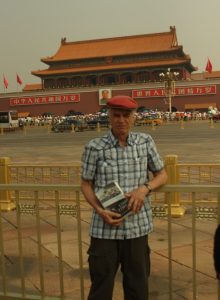
27.7.2014,德國讀者巴特爾攜帶《子彈鴉片—天安門大屠殺的生與死》去北京,特地拍了這張照片送給廖亦武
我最近读了廖亦武的《子弹鸦片》,这本书让我对中国政治异见人士在狱中和狱后的生活有了深刻的了解。
我想知道廖亦武是否愿意接受一次关于他的书和个人经历的采访……
高中女生阅读《子弹与鸦片》?难以置信!!而且她来自引起全世界关注的Minneapolis市,ICE特警曾在那儿公开枪杀了两位美国公民。
我决定接受书面采访。我写到:ICE就像37年前的共产党戒嚴部隊,濫用國家暴力,鎮壓和平抗議的民眾,特朗普就是美國版的獨裁者鄧小平,必須引咎辞职。
- 您最初是如何参与政治异议活动的?
我最初对政治不感兴趣,当1989年北京发生几百万人参加的游行示威,推动中国独裁政治向民主政治转型的时候,我作为一个全国有名的诗人,却以“不参加任何政治运动”为理由,拒绝了许多诗人、作家同行的挽留和邀请。我从当时风起云涌的北京,坐了两天两夜的火车,回到四川一个叫“涪陵”的长江边的山城。直到6月1日,一个叫Michael-Martin-Day(中文名:戴迈河)的美国汉学家从北京到“涪陵”来找到我,他有一台非常好的收音机,可以收听天安门广场的现场报道。当时,有许多西方民主国家的媒体记者都在做现场报道…… Michael在我家住了半个月——1989年6月4日凌晨,我们从收音机里听到了密集的枪声和惨叫,还有坦克和军车的轰鸣,民众的一阵阵怒吼、呼救和哭泣……我一下子就懂得了“政治”是什么,我决定要反抗政治,我对住在我家的Michael和另一个中国诗人宣布:“从此后,我是一个持不同政见者。“
您对六四事件的第一反应是什么?
我在六四凌晨,北京天安门发生大屠杀的时候,朗诵了长诗《大屠杀》,并且和Michael一起,制作成了磁带——《大屠杀》是我一生中最有名的诗歌——这盘诗歌磁带在中国20多个城市流传,被许多人翻录。美国垮掉一代诗人艾伦–金斯伯格的《嚎叫》对我影响很大,但是,《大屠杀》比《嚎叫》更加疯狂和绝望(这一切,都写进了我的监狱自传《 For a Song and a Hundred Songs: A Poet’s Journey through a Chinese Prison》)。
您作为政治犯的经历是怎样的?与非政治犯的经历有何不同?
我因为写作和朗诵《大屠杀》,以及组织剧组拍摄诗歌电影《安魂》,被国家安全局逮捕,在三个监狱关押了两年多以后,四川省重庆市法院以”反革命宣传煽动罪“,判处我四年有期徒刑。
和我同时被逮捕的,还有8个诗人 ,另外,在中国许多城市,警察们都在收缴《大屠杀》磁带和抓捕传播者。我所知道的,有20-30多人被传讯和短期关押。 Michael-Martin-Day则被当作”西方的间谍“被中国驱逐出境。
我和许多非政治犯关押在一起,也先后和20多个死刑犯关押在一起,我受过许多酷刑,比如双手反铐在背后,长达20多天,大便和小便都要请求别的犯人帮忙。还有电警棍捅进肛门。遭受毒打等等。我有两次自杀的经历,因为痛得实在受不了。我也曾亲眼看着死刑犯被拉出牢房,执行枪决。所以,我在监狱中的遭遇,和非政治犯没什么不同。
出狱后,您为什么选择采访六四事件的参与者,特别是那些“暴徒”?您在采访过程中遇到了哪些挑战?
出狱后,邓小平的中国,已经变成一个把”人民币“当作宗教的国家,正如现在,商人特朗普的美国,正在把”美元“当作宗教。我觉得,天安门大屠杀正在被人遗忘,我自己也正在被人遗忘。于是,我决心放弃做诗人,改做一个历史的见证人,我在监狱中,就开始秘密写作,出了监狱,依旧在秘密写作 《 For a Song and a Hundred Songs: A Poet’s Journey through a Chinese Prison》,我的手稿被警察抄家搜走了三次,最后一次,终于保留下来。
然后,由于共同的经历,我花了很多年,寻找和访问参与抵抗戒严部队的”暴徒“。《子弹鸦片》的关键人物叫武文建,是一个画家,他在去年突然生病死了——而1989年,他才19岁,他从戒严部队的冲锋枪和棍棒下,死里逃生,躲在乡下,还是被抓起来,判刑7年。几百个六四暴徒和他在同一个监狱。在他的带领和说服下,有十多个”暴徒“接受了采访。更多的”暴徒“却因为恐惧而拒绝了。《子弹鸦片》的另一部分,是和我在同一座监狱内的六四政治犯。这本书的德文版发表于2012年,我因此获得了法兰克福书展的德国书业和平奖,而英文版、法文版和日文版却几经波折,直到2019年才发表。
《子弹鸦片》是1989年六四屠杀至今,唯一的一本记录和描述平民”暴徒“的书,可是,在六四那晚,参与抵抗戒严部队的北京平民”暴徒“,有上百万,被判死刑的,至少几十个人;被判20年以上的重刑,而坐牢多年的,也有好几百个人。我的工作太渺小了,一个人的能力也太有限……
您为什么逃往德国?您在那里的经历如何?
为了出版我的书。2011年,德国最大的出版社S Fischer决定发表《For a Song and a Hundred Songs》,而美国最大的出版社之一哈勃柯林斯,决定发表《上帝是红色的》。国家安全局得到情报,就突然袭击我家,检查电脑,幸好我有全球代理人,为了安全,纽约代理人彼得–伯恩斯坦没有把出版合约寄给我。警察们没有搜到出版合同,我就竭力否认会在德国和美国发表书籍。
安全局特工警告我,如果我的两本书在国外发表了,我会被判处10年以上有期徒刑。可是,我作为见证这个可怕时代的作家,我必须发表我的劳动成果——同时,我不想因为发表书籍再一次进监狱。我的年龄太大了,会像我的朋友刘晓波(2010年诺贝尔和平奖得主)那样,死在监狱里。
于是我只有逃离中国。我花了很多钱买通中国和越南边境的黑社会,从越南辗转逃到德国。作为非法移民,如果我在今天逃到美国,肯定会被特朗普的ICE抓进移民监狱,已经有一个叫关恒的年轻人,因为冒险拍摄新疆的种族灭绝集中营,而不得不逃亡美国,却被特朗普的ICE抓起来,关在移民监狱好几个月。幸好被民间人权组织发现了,发出呼吁,才没被遣送回中国——写到这里,我怒火升腾,联想起了你的家乡Minneapolis市,ICE特警在大街上拦截、检查车辆和行人;在没有任何搜查证的情况下,持枪闯入平民房屋抓”罪犯“,甚至连5岁的孩子也进了监狱——在不到三周的时间,先后公开枪杀 Renée Good和 Alex Pretti——这太像1989年的北京六四屠杀了,美国ICE相当于中国的戒严部队,以国家安全的名义,滥用国家暴力——中国的政府发言人造谣说,赤手空拳的被害者是”六四暴徒“,而美国总统、副总统、司法部长等等,却造谣说, Renée Good和 Alex Pretti 是”恐怖分子“,要威胁了ICE特警的生命。特朗普就是下令开枪镇压平民的美国版邓小平。
所以,我在脸书上写了一篇短文:
他今天被槍殺
He was shot dead today.
但是,他今天被槍殺,是美國乃至西方歷史的轉折點。不管以何種左派或右派的政治名義,國家暴行都必須停止。造成這一切的特朗普必須引咎辭職。否則,這將成為撕裂美國乃至西方(但願不是內戰)的最可怕的導火索
However, his assassination today marks a turning point in American and Western history. Regardless of any left-wing or right-wing political justification, state violence must cease. Trump, who brought this upon us, must resign in disgrace. Otherwise, this will become the most terrifying fuse to tear apart America and the West—let us hope not into civil war.
亚历克斯·杰弗里·普雷蒂。白人男性,出生于伊利诺伊州。明尼苏达大学毕业生,美国退伍军人事务部医疗专业人员,户外运动爱好者和爱狗人士,合法持枪且无犯罪记录。
Alex Jeffrey Pretty. White male, born in Illinois. Graduate of the University of Minnesota, medical professional with the U.S. Department of Veterans Affairs, outdoor enthusiast and dog lover, legally licensed gun owner with no criminal record.
他在2026年1月24日被Ice槍殺
He was shot and killed by ICE on January 24, 2026.
他在街頭合法拍摄Ice执法人员,当他试图将一名被Ice警察喷射胡椒喷雾的抗議女孩拉离危险区域时,他被扑倒、围殴,随后被射杀。
He was legally filming ICE officers on the street when he attempted to pull a protesting girl, who had been pepper-sprayed by ICE agents, away from the danger zone. He was then tackled, beaten, and subsequently shot.
您为什么认为讲述六四事件的故事如此重要?
今天,你采访了我,你比我年轻那么多,居然也对《子弹鸦片》有如此强烈的兴趣,所以,我相信,这本书,作为唯一的一本记录和描述天安门大屠杀中的平民抗暴者的书,会流传下去。我在德国和中文互联网,也有相当多非常年轻的德文和中文读者,每当他们给我写信,打听我的消息,我都会觉得我的人生,我的写作,有绝大多数作家都无法取代的独一无二的意义。
特别是在当今,乌克兰在抗击侵略大国俄罗斯,那么艰难,那么多人流血和死去,可是作为世界第一强大的美国,却丧失了坚持了无数年月的自由、民主、平等、和平的普世价值,总统特朗普一心想从这场战争中获得巨大利益,不是为了美国人民,而是为了他自己的金钱和权力。美国人民应该从这个教训中认识到,选举一个道德水平低下、毫无教养可言的文盲当总统,言论自由的民主国家会很快被颠覆。沦为全世界的可悲的笑话。
您对中国的未来有哪些担忧?
如果特朗普被弹劾,我对中国未来的担忧就会少很多。因为我相信下一任美国总统,无论是共和党还是民主党,都会支持乌克兰打赢反侵略战争。这样的话,独裁中国就失去了最强大的国际盟友,西方民主阵营将重新整合,集结,共同面对中国–俄罗斯–伊朗–朝鲜的独裁联盟——如果独裁联盟被瓦解,中国成了唯一的独裁大国,那么,巨大的政治改变就将很快发生——如果中国独裁体制过渡到民主体制,人民拥有自由和权利,就会珍惜自己脚下的家乡,就不会有当今这么多非法移民,朝美国和欧洲逃亡了。
相信中国会改变,这也是我写下去的动力之一。
Message Body:
To whom it may concern,
I am reaching out to Bernstein Literary Agency with the hope of connecting with Liao Yiwu, who is represented by the agency.
My name is Eleanor Piersma and I am an 11th-grade student at DeLaSalle High School in Minneapolis, Minnesota. I am currently working on a National History Day research project in the form of a short documentary on the topic of the Tiananmen Square protests and massacre.
I recently read Liao Yiwu’s book Bullets and Opium, which provided me with deep insight into the lives of Chinese political dissidents during prison and afterwards.
I was wondering if Liao would be willing to participate in an interview about his book and his personal experiences via Zoom, another video-calling platform, or email. I am available at almost any time, so please let him know to let me know what date and time works for him. I speak both Mandarin Chinese and English.
Thank you for your time and consideration,
Eleanor Piersma
Class of 2027
DeLaSalle High School